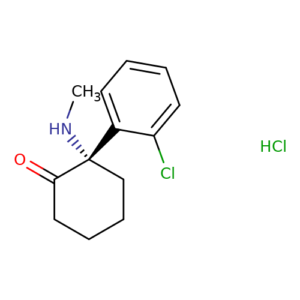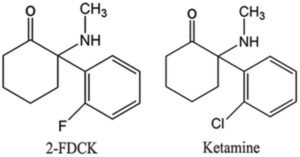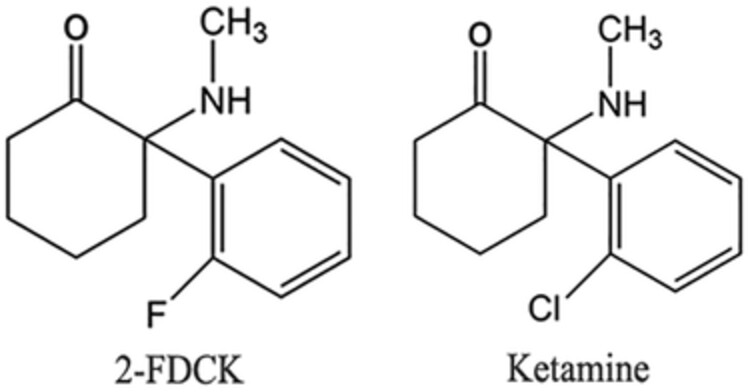
2F-ketamine (2-fluorodeschloroketamine) and ketamine are closely related compounds within the arylcyclohexylamine class, often discussed in the context of dissociative substances. While they share structural similarities, their effects, duration, and research background differ in important ways.
Chemical Structure and Background
Ketamine is a well-known compound with established medical uses, particularly in anesthesia and, more recently, in controlled psychiatric treatments. In contrast, 2F-ketamine is a synthetic analog of ketamine, modified by the addition of a fluorine atom. This small chemical change can influence how the substance interacts with the brain and body.
Effects and Experience
Both substances are classified as dissociatives, meaning they can alter perception, mood, and awareness. Users commonly describe effects such as:
- Sensory distortion and altered perception
- Feelings of detachment from surroundings
- Changes in time perception
However, anecdotal reports suggest some distinctions:
- Ketamine is often described as having a more intense and sometimes shorter-lasting dissociative effect.
- 2F-ketamine is sometimes reported to produce a smoother, longer-lasting experience, though this is not well established scientifically.
Duration and Potency
One commonly discussed difference is duration. Some reports indicate that 2F-ketamine may last longer than ketamine, but with slightly less intensity. However, reliable clinical data is limited, and effects can vary widely depending on individual factors.
Safety and Risks
Ketamine has been studied extensively in medical settings, meaning its short-term effects, risks, and safe clinical uses are relatively well understood. In contrast, 2F-ketamine remains largely unresearched, which introduces several uncertainties:
- Unknown long-term health effects
- Variable purity and composition in unregulated markets
- Increased risk of adverse reactions due to lack of standardized dosing
Both substances carry risks such as impaired coordination, cognitive disruption, and potential psychological distress. Combining them with other substances, especially depressants, can significantly increase danger.
Legal Status
Ketamine is a controlled substance in many countries but may be legally used in medical settings. 2F-ketamine often exists in a legal gray area or is controlled under analog laws, depending on the region.
Conclusion
While 2F-ketamine and ketamine share similarities, the key difference lies in research, safety, and reliability. Ketamine has a documented medical background, whereas 2F-ketamine remains largely experimental with many unknowns. Anyone seeking information should prioritize safety, legality, and credible scientific data when evaluating these substances.