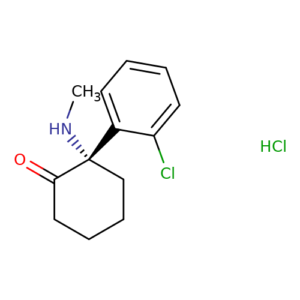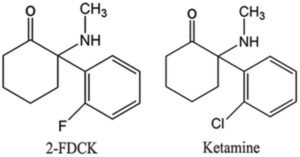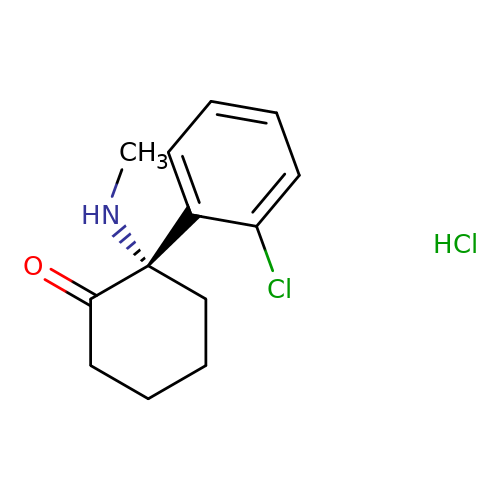
The ketamine crystal structure offers a fascinating window into the world of molecular chemistry, where precision, symmetry, and spatial arrangement define both function and behavior. Widely studied within the context of Organic Chemistry and Pharmacology, ketamine’s crystalline form reveals the intricate architecture behind this well-known compound.
Molecular Composition and Structural Framework
At its core, ketamine is classified as an arylcyclohexylamine, featuring a cyclohexanone ring bonded to a chlorophenyl group and an amine functional group. In its crystalline state, these molecules arrange themselves into a highly ordered lattice, stabilized by intermolecular forces such as hydrogen bonding and van der Waals interactions.
This crystal lattice structure plays a crucial role in determining key physical properties like solubility, melting point, and stability—factors that are essential for controlled laboratory analysis. Researchers often explore these attributes to better understand compound behavior under varying experimental conditions.
Why Crystal Structure Matters in Research
The study of ketamine’s crystal structure is more than just theoretical—it directly impacts analytical accuracy and reproducibility. By examining how molecules pack together in solid form, scientists can gain insights into:
- Purity assessment and quality control
- Polymorphism (different crystal forms of the same compound)
- Stability under environmental changes
- Interaction with solvents and reagents
These insights are especially valuable in advanced analytical techniques such as X-ray crystallography, where the 3D arrangement of atoms is mapped with high precision.
Unique Structural Characteristics
What sets ketamine apart is its chiral center, meaning it exists in two enantiomeric forms (mirror-image structures). This adds another layer of complexity to its crystal structure, as different enantiomers can crystallize in distinct ways, influencing both physical and chemical properties.
Additionally, the presence of the chlorine atom within the phenyl ring contributes to enhanced molecular stability and affects how the compound interacts within the crystal lattice. These subtle yet impactful features make ketamine a subject of ongoing scientific interest.
Optimized for Discovery and Visibility
For researchers and professionals exploring ketamine crystal structure, this topic aligns with high-value keywords such as molecular crystal analysis, ketamine chemical structure, arylcyclohexylamine properties, and crystal lattice chemistry. Its relevance spans multiple disciplines, making it a cornerstone subject in modern chemical research.
Read More: ketamine for sale online