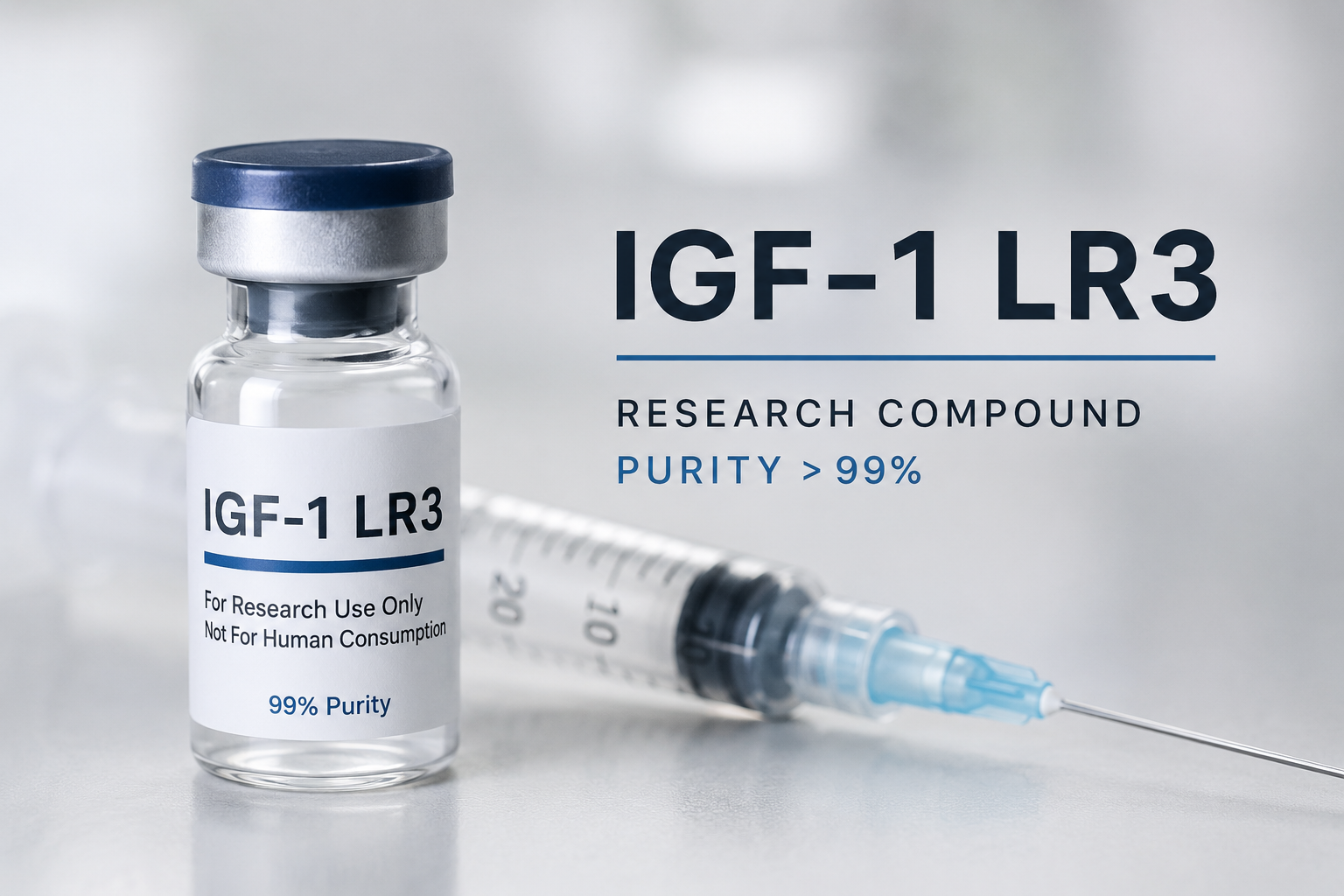
IGF-1 LR3 dosering is een van de meest gezocht onderwerpen onder individuen onderzoeken peptide therapie, prestatie herstel, en groeifactor optimalisatie. Veel mensen horen over IGF-1 LR3 door fitness communities of anti-aging discussies, maar worstelen om te begrijpen hoe doseren werkt, waarom timing belangrijk is, en welke factoren de resultaten beïnvloeden.
Deze educatieve gids legt uit IGF-1 LR3 doseringsprincipes, cyclusstructuur, verwachte effecten, veiligheidsoverwegingen en beste praktijken voor verantwoord peptideonderzoek.
IGF-1 LR3 begrijpen
IGF-1 LR3 staat voor Insuline-Zoals Groei Factor-1 Long R3. Het is een aangepaste versie van natuurlijk voorkomende IGF-1, een hormoon dat voornamelijk in de lever wordt geproduceerd na groeihormoonstimulatie.
Onderzoekers ontwikkelden de LR3-versie om de stabiliteit te verbeteren en de activiteit binnen het lichaam uit te breiden. Vergeleken met natuurlijke IGF-1 blijft dit gemodificeerde peptide langer actief en bindt het efficiënt aan spierweefselreceptoren.
IGF-1 speelt een centrale rol in:
- Cellulaire groei en reparatie
- Spiereiwitsynthese
- Nutriëntgebruik
- Herstel na fysieke stress
- Weefselregeneratieprocessen
Vanwege deze functies bestuderen peptide onderzoekers vaak IGF-1 LR3 in relatie tot hersteloptimalisatie en lichaamssamenstellingsondersteuning.
Hoe IGF-1 LR3 Werkt in het lichaam
IGF-1 LR3 interageert rechtstreeks met IGF-receptoren in spiercellen en andere weefsels. In plaats van simpelweg het verhogen van hormoon niveaus, het verbetert hoe cellen voedingsstoffen gebruiken en zichzelf herstellen.
Het peptide ondersteunt:
- Verhoogde opname van aminozuur
- Verbeterde spiercel signalering
- Verbetering van de efficiëntie van het herstel
- Ondersteuning voor de ontwikkeling van mager weefsel
In tegenstelling tot groeihormoon secretagogen, IGF-1 LR3 werkt stroomafwaarts in de hormonale route. Dit verschil verklaart waarom doseringsstructuur en timing een zorgvuldige planning vereisen.
Algemene IGF-1 LR3-doseringsbeginselen
Educatieve discussies over peptideonderzoek richten zich op gestructureerde en conservatieve benaderingen. Doseringsplanning is afhankelijk van onderzoeksdoelen, ervaringsniveau en individuele biologische respons.
Typische educatieve onderzoekstrajecten die vaak worden besproken zijn:
- Protocollen met lagere reikwijdte voor beginners
- Matige onderzoekstrajecten voor ervaren gebruikers
- Geavanceerde gestructureerde cycli die alleen met toezicht worden gebruikt
Onderzoekers beginnen meestal conservatief en passen zich geleidelijk aan op basis van observatie in plaats van agressieve startbedragen.
Consistentie speelt een grotere rol dan hoge dosering. Stabiele toediening ondersteunt voorspelbare receptorinteractie en verbeterde onderzoeksresultaten.
Tijdschema voor IGF-1 LR3
Timing vertegenwoordigt een van de belangrijkste elementen van effectief peptidegebruik.
Omdat IGF-1 LR3 langer actief blijft dan veel peptiden, heeft toediening geen frequente dagelijkse injecties nodig. Veel onderzoeksprotocollen geven de voorkeur aan eenmaal daagse timing.
Gemeenschappelijke timingstrategieën omvatten:
Administratie na de opleiding
Veel onderzoekers studeren administratie na fysieke trainingen. Spieren tonen een verhoogde voedingsgevoeligheid tijdens herstelperiodes, wat de peptide interactie kan verbeteren.
Ochtendtiming
Sommigen geven de voorkeur aan 's ochtends toediening om af te stemmen op metabole activiteit gedurende de dag.
Consistent dagschema
Het handhaven van dezelfde timing elke dag helpt het creëren van stabiele fysiologische signalering patronen.
Regelmatige planning leidt vaak tot betere resultaten dan inconsistente timing.
Cycluslengte en structuur
Peptidecycle helpt de receptorrespons te behouden en ondersteunt de consistentie van onderzoek op lange termijn.
Typische onderwijscyclusstructuren zijn:
- Inleidende cycli van vier tot zes weken
- Gestructureerde cycli van acht weken
- Gevolgd door geplande uitvalperioden
Door breaks kan het lichaam de receptorgevoeligheid resetten en aanpassing voorkomen.
Cyclusplanning moet altijd voorrang geven aan geleidelijke progressie in plaats van snelle escalatie.
Verwachte effecten tijdens een cyclus
Individuele respons varieert sterk, maar educatieve observaties beschrijven vaak verschillende categorieën resultaten.
Ondersteuning voor spierherstel
IGF-1 LR3 speelt een belangrijke rol bij weefselherstel. Veel onderzoekers zien sneller herstel tussen trainingen.
Lean Tissue Development
Het peptide kan de spierontwikkeling ondersteunen in combinatie met gestructureerde training en adequate voeding.
Nutriëntenpartitie
Een verbeterd gebruik van voedingsstoffen is een ander vaak besproken effect. Het lichaam kan voedingsstoffen efficiënter richting spierherstel in plaats van vetopslag.
Duurzaamheid van de prestaties
In plaats van een plotselinge transformatie wordt de geleidelijke verbetering van de herstelcapaciteit vaak merkbaar in de tijd.
Levensstijl gewoonten sterk invloed resultaten. Voeding, slaapkwaliteit en trainingsbalans blijven essentiële factoren.
Levensstijlfactoren Die invloed op de dosering resultaten
Peptides ondersteunen biologische processen, maar levensstijl keuzes bepalen de algehele effectiviteit.
Voedingsstrategie
Adequate eiwitinname levert aminozuren die nodig zijn voor weefselherstel. Gebalanceerde koolhydraten en vet inname ondersteunt hormonale stabiliteit.
Programmering van opleidingen
Gestructureerde weerstandstraining biedt de vereiste stimulans voor groeifactoractiviteit. Overtraining kan de terugvorderingsvoordelen verminderen.
Slaapoptimalisatie
Diepe slaap bevordert natuurlijke hormoonbalans en verbetert herstel signaalroutes.
Stressbeheer
Hoge stressniveaus verheffen cortisol, wat het signaleren van groeifactor kan belemmeren. Herstelpraktijken en mentale welzijnsstrategieën verbeteren de consistentie.
Veiligheid en verantwoord onderzoek
Veiligheid bewustzijn blijft essentieel bij het onderzoeken van peptiden.
IGF-1 LR3 is in veel regio's vaak geclassificeerd als een onderzoekscompound. De status van de regelgeving varieert, dus professionele begeleiding blijft belangrijk voordat peptideprotocollen worden onderzocht.
Belangrijkste veiligheidsoverwegingen zijn:
- Raadpleeg gekwalificeerde gezondheidswerkers
- Monitor metabole gezondheidsmarkers
- Vermijd het combineren van onbekende stoffen
- Behoud steriele bereidingspraktijken
Sommige individuen ervaren tijdelijke aanpassingen in verband met eetlust of energieniveaus. Verantwoord toezicht draagt bij tot een weloverwogen besluitvorming.
Who Commonly Researchs IGF-1 LR3
Interesse in IGF-1 LR3 strekt zich uit over verschillende wellness- en onderzoeksgemeenschappen.
Typische groepen zijn:
- Fitness liefhebbers gericht op herstel optimalisatie
- Personen die een lange levensduur van prestaties onderzoeken
- Volwassenen die gezonde verouderingsstrategieën verkennen
- Atleten beheren intense trainingseisen
De meeste individuen verkennen peptideprotocollen als onderdeel van bredere wellnessstrategieën in plaats van kortetermijnoplossingen.
Veel voorkomende vragen over IGF-1 LR3
Hoe snel verschijnen de resultaten?
Herstel verbeteringen kunnen merkbaar worden binnen enkele weken. Veranderingen in de lichaamssamenstelling ontwikkelen zich doorgaans geleidelijk.
Zijn hogere doses beter?
Consistentie en gestructureerde planning zijn meestal belangrijker dan agressieve doseringsstrategieën.
Zijn cycluspauzes nodig?
Geplande pauzes helpen de receptorgevoeligheid en de werkzaamheid op lange termijn te behouden.
Heeft dieet invloed op de resultaten?
Voeding speelt een belangrijke rol. Peptiden verbeteren de biologische signalering maar kunnen de juiste voedingsgewoonten niet vervangen.
Perspectief op lange termijn voor de optimalisatie van de groeifactor
Modern peptideonderzoek richt zich in toenemende mate op duurzame prestaties en preventief welzijn. In plaats van dramatische kortetermijndoelstellingen benadrukken veel onderzoekers geleidelijke optimalisatie.
Succesvolle langetermijnbenaderingen omvatten:
- Op feiten gebaseerde planning
- Realistische verwachtingen
- Consistente routines
- Voortgezet onderwijs
IGF-1 LR3 onderzoek past vaak in bredere herstel-, prestatie- en levensduurstrategieën.
Hoge kwaliteit IGF-1 LR3 producten kiezen
Product quality significantly influences research consistency. Reputable peptide suppliers emphasize laboratory testing, purity verification, and professional handling standards.
Reliable sourcing helps ensure:
- Accurate peptide concentration
- Stable formulation quality
- Proper storage conditions
- Transparent customer support
Selecting trusted suppliers remains one of the most important steps when researching peptides.
Laatste gedachten
Begrip IGF-1 LR3 dosering requires more than learning numbers or schedules. Effective peptide research depends on education, structured planning, lifestyle alignment, and responsible sourcing.
Growth factors support cellular repair and recovery processes when used within informed and disciplined frameworks. Individuals who combine education with consistency often achieve the most sustainable outcomes.
Get Started With Ketacynpharma
Explore premium peptide research solutions through the official Ketacynpharma campaign:
IGF‑1 LR3 Product Page at Ketacynpharma
igf 1 lr3 1mg (10 injectieflaconverpakking)
Discover the complete range of Ketacynpharma products at:
Officiële website van Ketacynpharma
For product guidance, research information, or ordering assistance, contact Dr Brainia directly.
Bel of WhatsApp: +1 (531) 400 1813
Message or call on WhatsApp to speak with Dr Brainia about Ketacynpharma products, peptide research support, and ongoing product campaigns.