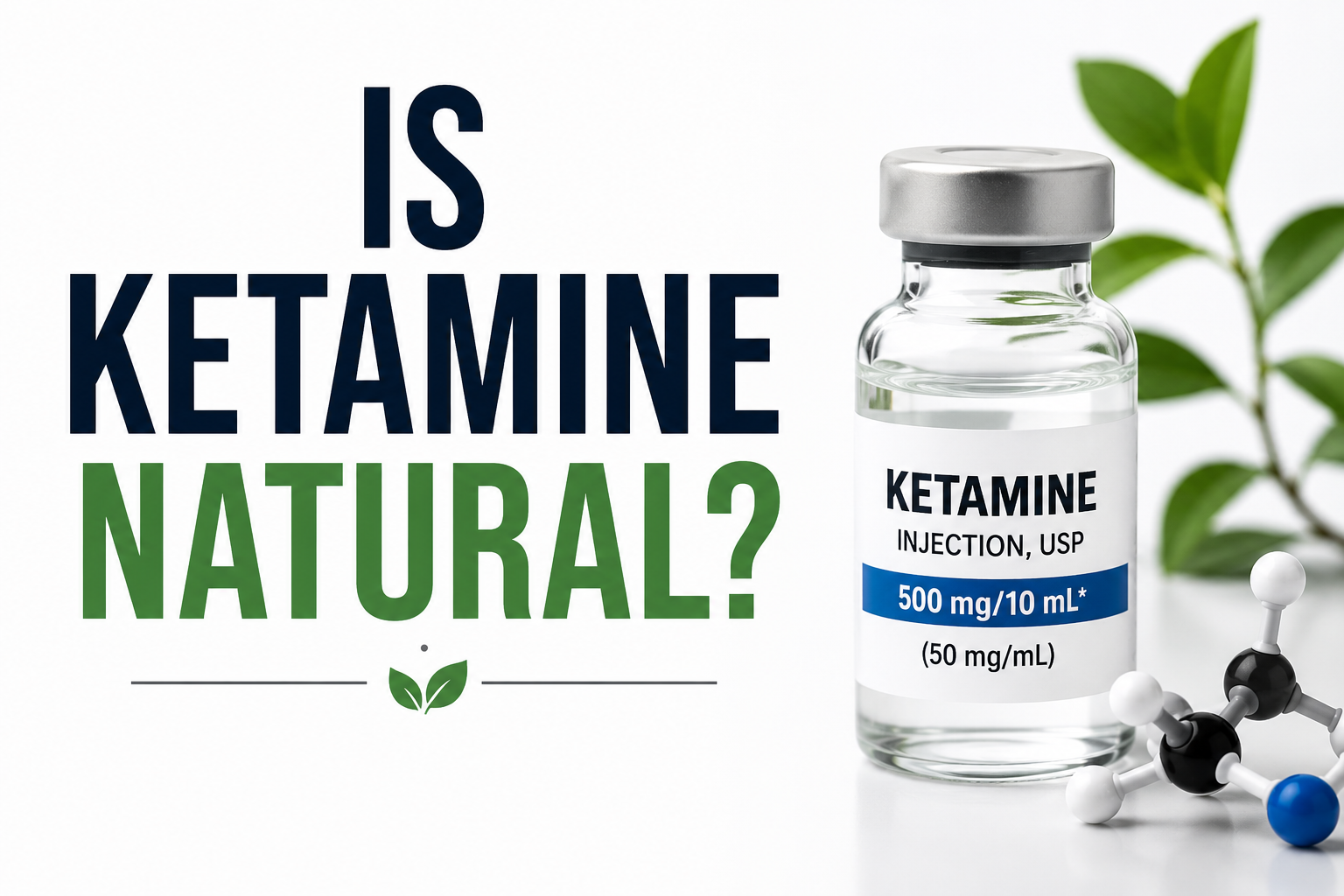
Is Ketamine Natural?
Many people searching for alternative wellness options often ask, “is ketamine natural?” The answer is straightforward: ketamine is not a naturally occurring substance. Scientists developed it in a laboratory during the 1960s as an anesthetic medication. Although ketamine does not come directly from plants, herbs, or natural sources, it has become an important medical compound used in hospitals and research settings worldwide.
Understanding where ketamine comes from and how it works can help consumers make informed decisions when exploring wellness products, pharmaceutical options, and emerging therapies. This guide explains the origins of ketamine, its development, how it differs from natural compounds, and why it continues to attract attention in the medical community.
The History of Ketamine
Researchers first synthesized ketamine in 1962 while searching for safer anesthetic medications. Medical professionals needed a compound that could provide pain relief and sedation while maintaining patient safety.
After extensive testing, ketamine entered medical use in the 1970s. Healthcare providers quickly recognized its effectiveness for anesthesia, emergency medicine, and surgical procedures. Over time, researchers also explored additional applications that extended beyond its original purpose.
Today, ketamine remains an important pharmaceutical product used under medical supervision in many healthcare settings.
What Does “Natural” Mean?
To determine whether a substance is natural, it helps to understand the definition of the term.
A natural substance typically comes directly from nature without significant chemical modification. Examples include:
- Chamomile flowers
- Lavender oil
- Ginger root
- Turmeric
- Peppermint leaves
These products originate from plants and undergo minimal processing before consumption or use.
Ketamine does not fit this category because scientists create it through laboratory synthesis. Its production requires controlled chemical processes that do not occur naturally in the environment.
As a result, ketamine is classified as a synthetic compound rather than a natural one.
How Is Ketamine Made?
Manufacturing ketamine involves advanced pharmaceutical processes carried out in regulated laboratory environments.
Scientists combine specific chemical ingredients through carefully monitored reactions. The resulting compound undergoes purification and quality testing to ensure consistency, safety, and effectiveness.
Pharmaceutical manufacturers must follow strict standards established by regulatory agencies. These standards help ensure that each batch meets required specifications before distribution.
Because ketamine requires laboratory synthesis, it cannot be harvested from plants, fungi, or other natural sources.
Why Do People Think Ketamine Is Natural?
Several factors contribute to this common misconception.
Growing Interest in Alternative Wellness
Many consumers explore products that support mental wellness, relaxation, and overall quality of life. During this search, they often encounter discussions about ketamine alongside natural supplements and botanical ingredients.
This overlap can create confusion regarding its origin.
Medical Research and Public Awareness
News reports frequently discuss ketamine-related research. As awareness increases, people naturally become curious about where the compound comes from and whether it exists in nature.
Association With Other Wellness Products
Some individuals compare ketamine with plant-based compounds because both categories receive attention within wellness conversations. However, their origins remain very different.
Natural Alternatives Compared With Ketamine
Natural wellness products and synthetic pharmaceuticals serve different purposes.
Popular natural ingredients include:
- Ashwagandha
- Rhodiola rosea
- L-theanine
- Valerian root
- Passionflower
- Magnesium
These substances originate from plants or naturally occurring minerals.
Ketamine, on the other hand, originates from pharmaceutical synthesis. Although both categories may appear in wellness discussions, they differ significantly in production methods, regulation, and intended uses.
Understanding these distinctions helps consumers evaluate products more accurately.
Medical Uses of Ketamine
Healthcare providers have used ketamine for decades because of its unique properties.
Common medical applications include:
Anesthesia
Ketamine remains widely used during surgical and emergency procedures. Medical professionals value its ability to provide anesthesia while maintaining important protective reflexes.
Pain Management
In certain clinical settings, physicians may use ketamine-based treatments as part of broader pain management strategies.
Ongoing Research
Researchers continue studying ketamine to better understand its effects and potential future applications. Scientific interest remains active because of its unique pharmacological profile.
Any medical use of ketamine should occur under professional supervision and according to applicable regulations.
Is Synthetic Always Bad?
Some consumers automatically assume that natural products are safer than synthetic ones. In reality, safety depends on many factors.
Natural substances can produce side effects, interactions, and risks. Likewise, synthetic compounds may offer significant benefits when used appropriately.
Examples of synthetic medications that have transformed healthcare include:
- Antibiotics
- Vaccines
- Insulin formulations
- Modern anesthetics
The key factor is proper development, testing, quality control, and responsible use.
Therefore, the fact that ketamine is synthetic does not automatically determine whether it is beneficial or harmful. Context and professional guidance matter.
Understanding Pharmaceutical Quality Standards
Pharmaceutical manufacturers operate under strict regulations.
Quality assurance programs typically include:
- Raw material testing
- Manufacturing controls
- Product purity verification
- Stability testing
- Batch consistency checks
These safeguards help ensure that products meet established standards before reaching healthcare providers.
Consumers should always seek products from reputable companies that prioritize transparency and quality.
Frequently Asked Questions
Is ketamine found in nature?
No. Ketamine does not occur naturally in plants, animals, or minerals. Scientists produce it through laboratory synthesis.
Was ketamine originally developed for medicine?
Yes. Researchers created ketamine as an anesthetic medication and introduced it for medical use in the 1970s.
Is ketamine considered a pharmaceutical product?
Yes. Ketamine is a pharmaceutical compound manufactured according to strict industry standards.
Can natural supplements replace ketamine?
Natural supplements and ketamine serve different purposes. Consumers should consult qualified healthcare professionals regarding any wellness or treatment decisions.
Why is ketamine still used today?
Medical professionals continue using ketamine because of its established role in anesthesia and ongoing scientific research.
Final Thoughts
The question “is ketamine natural” has a clear answer. Ketamine is a synthetic pharmaceutical compound created in a laboratory rather than derived directly from nature. Its development marked an important advancement in modern medicine, and researchers continue studying its unique properties today.
Consumers should understand the difference between natural substances and synthetic compounds when evaluating wellness products and healthcare options. Accurate information supports better decisions and encourages responsible product selection.
If you are looking for premium wellness products and trusted pharmaceutical solutions, explore the growing range of offerings available through Ketacynpharma.
Contact Ketacynpharma Today
Discover quality-focused products and learn more about available options at Ketacynpharma.com.
📞 Call: +1 531 400 1813
💬 WhatsApp or Message: +1 (531) 400 1813
Visit Ketacynpharma.com today to explore the latest Ketacynpharma product campaign and find solutions designed with quality, reliability, and customer satisfaction in mind.